
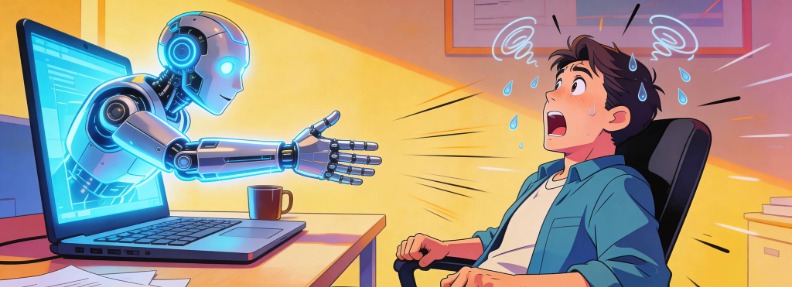
How AI is shaping the future of your job!
The data gives us a clearer answer than most headlines do.
The split that is already happening
According to PwC's 2026 Global AI Jobs Barometer, AI-exposed roles in the UAE grew by 13% between 2021 and 2024, compared to just 2% growth in roles with low AI exposure. The workforce is not shrinking — it is dividing. Roles that intersect with AI are expanding and evolving. Roles that do not are staying still. That gap will only widen as adoption accelerates.
The direction of travel is consistent across the region. With 43% of UAE work tasks and 45% of Saudi Arabia's work tasks projected to be delivered autonomously by 2030 — according to the WEF Future of Jobs Report 2025 — the pace of that division is not slowing down.
Where the pace of change is fastest
Not every sector is feeling this at the same speed. PwC's UAE analysis identifies customer service, financial and insurance activities, and administrative and support functions as among the most highly AI-exposed sectors in the market.
That does not mean these sectors are disappearing. It means the skills required to work within them are being redefined faster than almost anywhere else. A customer service professional today operates in a role that looks meaningfully different from the same role three years ago — and will look different again in three more. The same is true in finance, where back-office functions, routine reporting and standard processing are among the tasks most susceptible to automation.
For professionals in these spaces, the window to adapt is not years away. It is now.
No sector is standing still
What the data also makes clear is that the reshaping is not contained to a handful of industries. PwC's UAE Barometer shows AI job postings growing across energy, manufacturing, wholesale and retail trade, and professional and technical services — sectors that might not feel like obvious AI territory.
The pace varies. The direction does not. Every sector is seeing AI enter its workflows, redefine its skill requirements, and raise the bar for what it means to be competitive in a given role.
The only response that actually works
Automation is not approaching — it is already here, moving at different speeds across different sectors. The professionals who will navigate this best are not the ones with the most secure-sounding job titles. They are the ones who have already asked themselves: what does my role look like in three years, and what do I need to learn to stay ahead of that change?
That question is worth sitting with — regardless of your sector, your seniority, or how safe your role feels today. The data does not reward waiting. It rewards movement.
Your role is changing — the question is what you do next.
[Read next → My job is changing because of AI — how do I adapt?]
[Already know you need to move? Here is your transition guide → Your role is being automated. Here is what to do next.]
Related articles
Is AI actually taking jobs — or is that just fear
Somewhere between the headlines and the coffee machine conversations, it has become very hard to know what is actually true.One colleague tells you AI is coming for everyone. Anoth...
Read more
Your role is being automated. Here is what to do next.
You noticed it before anyone said anything out loud.A process that used to take your team a week now runs overnight. A task you spent years mastering gets done in minutes. The job ...
Read more
How to stand out without overstepping
Standing out at work is often encouraged but rarely explained. Many professionals worry that visibility might come across as showing off, while others hold back entirely to avoid d...
Read more