
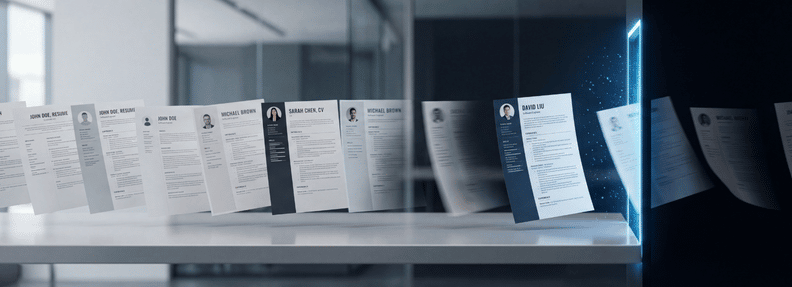
The hiring process has changed. Are you keeping up?
Applications that used to get callbacks now disappear into silence. Interviews feel different more structured, less conversational, sometimes not even with a person. The roles you are qualified for seem harder to land than they should be. And the advice you relied on five years ago does not seem to work the way it used to.
You are not imagining it. The hiring process has genuinely changed in how companies find candidates, how they screen them, how they interview, and how they decide. The rules that got you your last role may not be the rules that get you your next one.
The shift nobody announced
There was no single moment when hiring changed. It happened in layers software began filtering applications before humans saw them, interviews started being assessed by algorithms alongside hiring managers, and recruiters began spending less time per CV because the volume of applications made it physically impossible to do otherwise.
None of this was communicated to jobseekers. The process evolved on the employer side while candidates kept showing up with the same approach they had always used. That mismatch between how people search and how companies actually hire is where most of the frustration lives.
What this means for you
It means the job search in 2026 is a skill in itself. Knowing how to do the job is no longer enough. You need to know how to get the job and those are two very different competencies.
Understanding how screening works, what recruiters prioritise in a shrinking attention window, how to follow up without being ignored, and how to present yourself in a process that is faster and less forgiving than it used to be these are not optional extras. They are the baseline.
The good news is that none of this is mysterious. The process has changed, but it is not hidden. Once you see how it works, you can work with it instead of against it.
This month, we are breaking down the new rules of getting hired one at a time. Starting with the part most people get wrong first.
[Read next: Why your CV is being rejected before a human reads it →]
[Think the market is just too competitive? The data tells a different story →]
Related articles
Is your notice period hurting your job search?
You have the right experience.The job matches your skills.The interviewer is interested.Then comes one question:“How soon can you join?”You say two or three months, and suddenly th...
Read more
What should you do if your job search isn't working?
You have applied for dozens of jobs.Your CV is ready. Your profile is updated. You keep finding new openings and applying.But the interviews are not coming.Before sending another a...
Read more
How to talk about a short stint on your CV?
A role that lasted six or eight months on a CV is not the red flag most candidates fear it is. What makes it a problem is not the duration. It is how you handle it.Hiring managers ...
Read more